Battery energy storage container handling requires an agreed lifting interface, complete load information and a movement plan that protects the assembled system.
Use model geometry to narrow the review
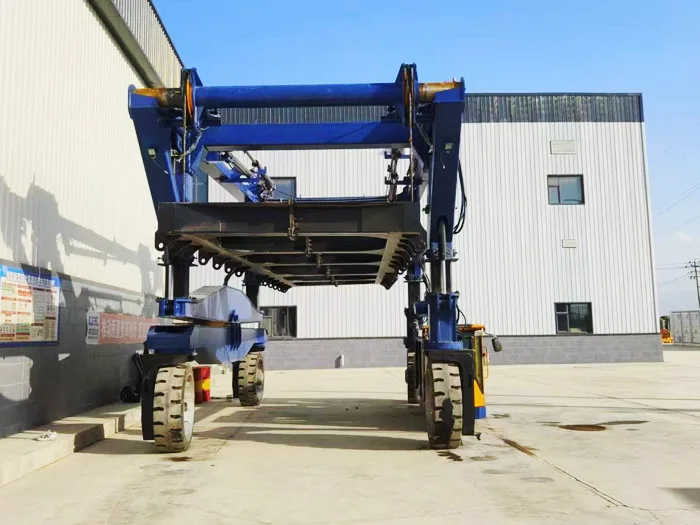
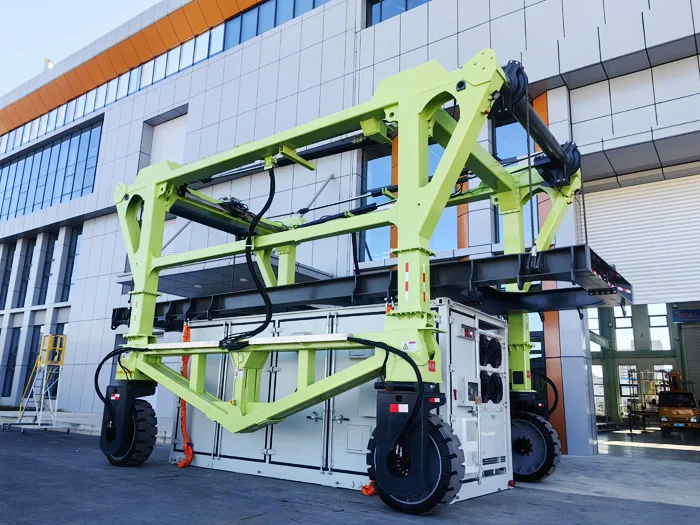
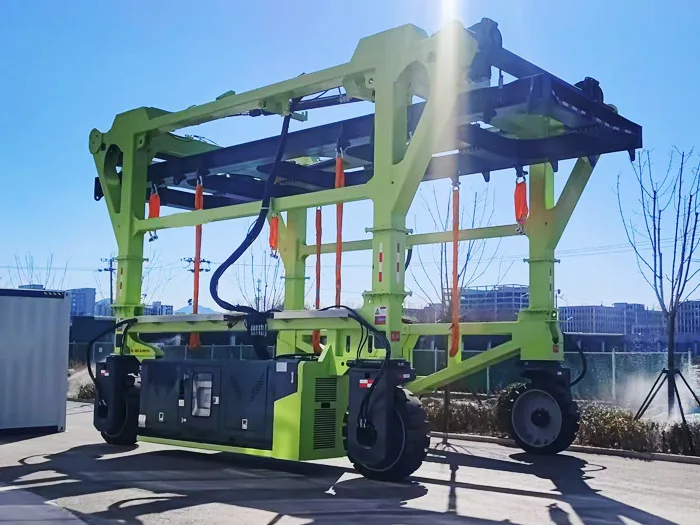
For finished energy storage units, compare the 35, 60 and 80 t catalogue versions using their frame dimensions and lifting attachments. For cabinet or framed-unit tasks, review SSC35 and its handling interface. Electric-series alternatives are listed on the container carrier page.
The complete unit drawing remains essential: catalogue capacity and overall machine dimensions do not establish the permitted load envelope.
Start with the handling task
BESS containers and cabinets combine structural frames with installed battery and power-system equipment. Their handling requirements should come from the system supplier, including lifting points, finished mass and permitted orientation. A machine must be selected around those requirements, rather than selecting a nominal capacity alone.
What your project brief should include
- Complete system mass and centre-of-gravity drawing.
- Approved lifting points, spreader or dedicated support frame.
- Container or cabinet envelope and required protective clearance.
- Route surface, gradients, overhead obstructions and turning space.
- Required placement tolerance and any restrictions on tilt or movement.
Select an equipment family
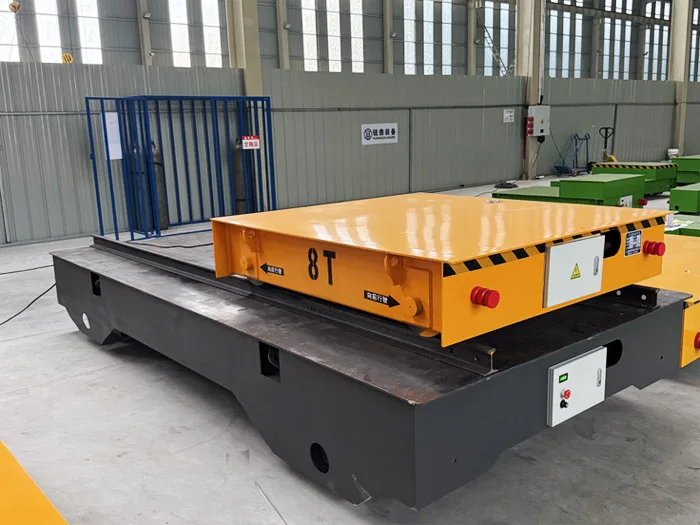
For lifting and carrying within a gantry frame, review straddle carriers. For supported transport on a deck, compare electric transfer carts. For repeated guided transport cycles, evaluate heavy load AGVs. The correct selection depends on the load-transfer process and operating site.
Define success before ordering
Use the same operating assumptions when comparing proposals. Specify a representative maximum load, route, operating cycle and loading interface. Agree how capacity, motion, docking, safety functions and handover performance will be verified for your configuration.
Next step: a project-specific review
Send your drawings and requirement list using our project enquiry form. Technical configuration, documentation, destination requirements and commercial scope are confirmed individually.