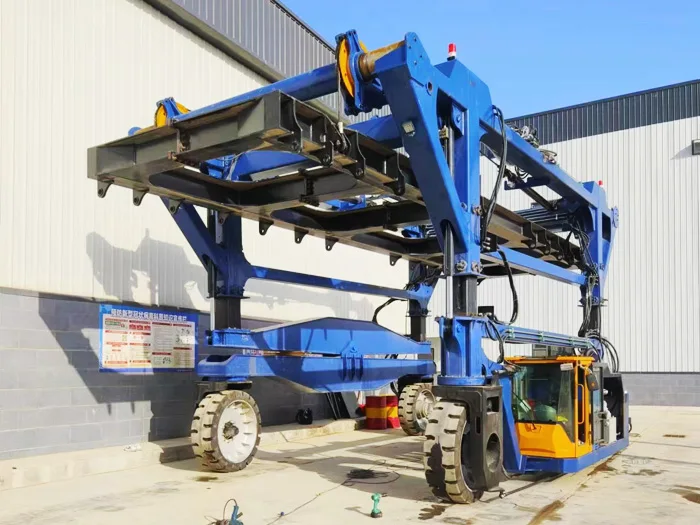
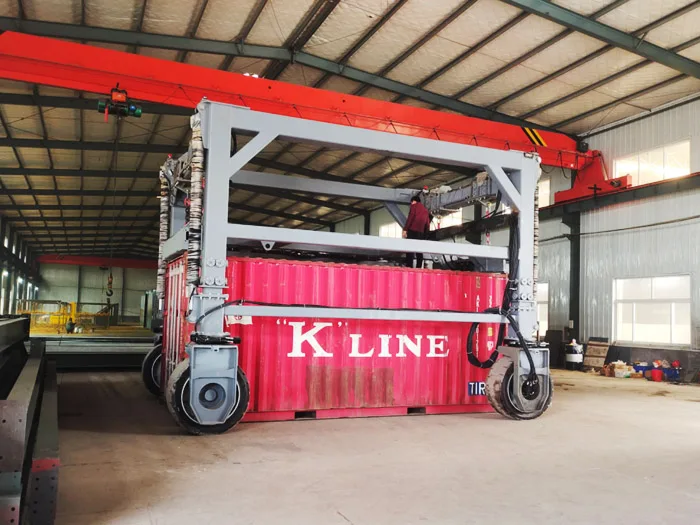
Match container lifting and transport to the working yard, access points and loading sequence.
Electric-series starting points
The supplied catalogue lists 35, 60 and 80 t electric container carriers with LFP batteries. Compare usable frame width, attachments and loaded route geometry, then request battery sizing and charging information for the intended operating cycle.
Start with the handling task
Container workflows are shaped by the points where a unit is collected, transported and placed. Define the required container dimensions, gross mass, lifting interface and transfer height. Existing ground surfaces and traffic patterns may limit the equipment envelope or route.
What your project brief should include
- Container sizes and maximum loaded gross mass.
- Pick-up, placement and trailer interface drawings.
- Aisle width, turning clearance and overhead restrictions.
- Ground bearing capacity, slopes and surface condition.
- Moves per shift and staging-area layout.
Select an equipment family
For lifting and carrying within a gantry frame, review straddle carriers. For supported transport on a deck, compare electric transfer carts. For repeated guided transport cycles, evaluate heavy load AGVs. The correct selection depends on the load-transfer process and operating site.
Define success before ordering
Use the same operating assumptions when comparing proposals. Specify a representative maximum load, route, operating cycle and loading interface. Agree how capacity, motion, docking, safety functions and handover performance will be verified for your configuration.
Next step: a project-specific review
Send your drawings and requirement list using our project enquiry form. Technical configuration, documentation, destination requirements and commercial scope are confirmed individually.