Build repeatable guided movement around a stable load-transfer process and clear production interfaces.
Define three connected control layers
The Ruiding AGV/RGV brochure architecture separates onboard vehicle controls, wireless route communication and supervisory PLC dispatch. A project brief should identify station signals, route network coverage and how production instructions reach dispatch. Confirm the interface protocol and fault-recovery responsibilities before installation.
Start with the handling task
An AGV must interact reliably with the loading and unloading process. Define what the vehicle receives, how the load is supported, how stations exchange readiness signals and what happens if the route is blocked. A stable operating process is the starting point for automation.
What your project brief should include
- Complete route and traffic interaction map.
- Load dimensions, fixtures and handover mechanism.
- Navigation approach and positioning tolerance to be agreed.
- Station signals, doors, charging and production-system interfaces.
- Project-specific risk assessment and acceptance tests.
Select an equipment family
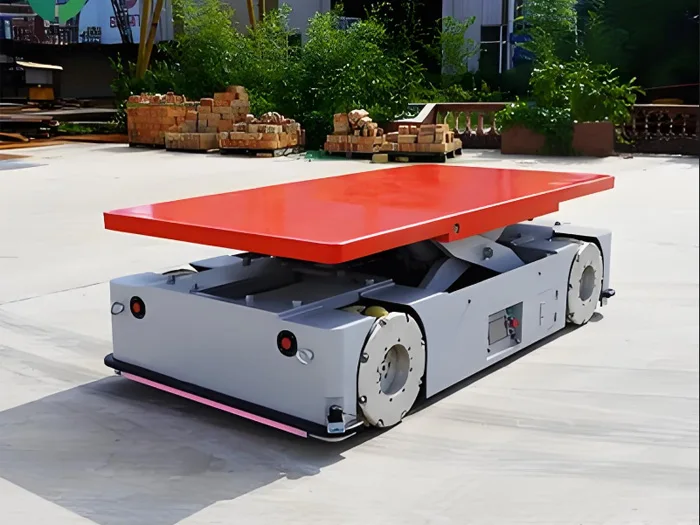
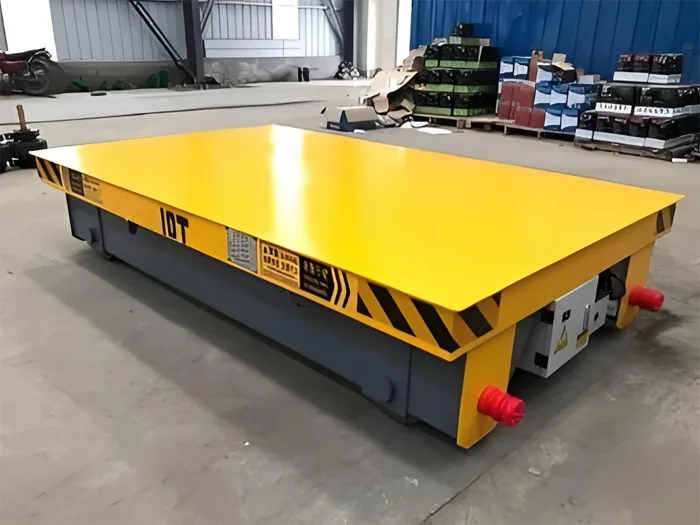
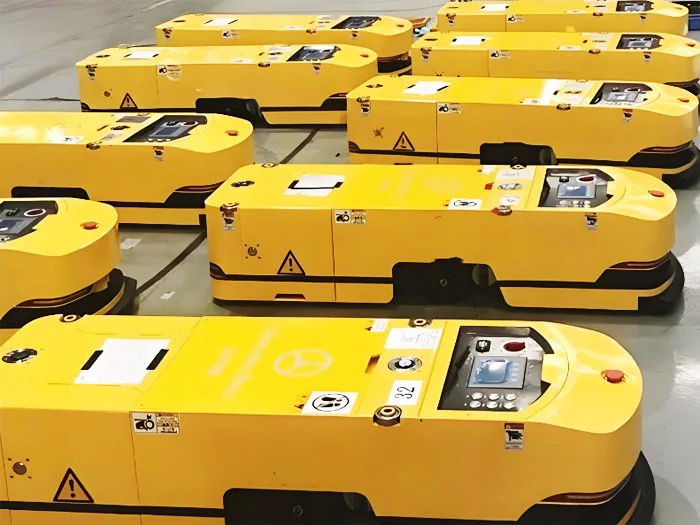
For lifting and carrying within a gantry frame, review straddle carriers. For supported transport on a deck, compare electric transfer carts. For repeated guided transport cycles, evaluate heavy load AGVs. The correct selection depends on the load-transfer process and operating site.
Define success before ordering
Use the same operating assumptions when comparing proposals. Specify a representative maximum load, route, operating cycle and loading interface. Agree how capacity, motion, docking, safety functions and handover performance will be verified for your configuration.
Next step: a project-specific review
Send your drawings and requirement list using our project enquiry form. Technical configuration, documentation, destination requirements and commercial scope are confirmed individually.